California needs a physician workforce that reflects the people it serves.
California faces widespread provider shortages, an aging healthcare workforce, and major gaps in racial, ethnic, and linguistic representation across medicine.
Contact LPOCScope of the problem
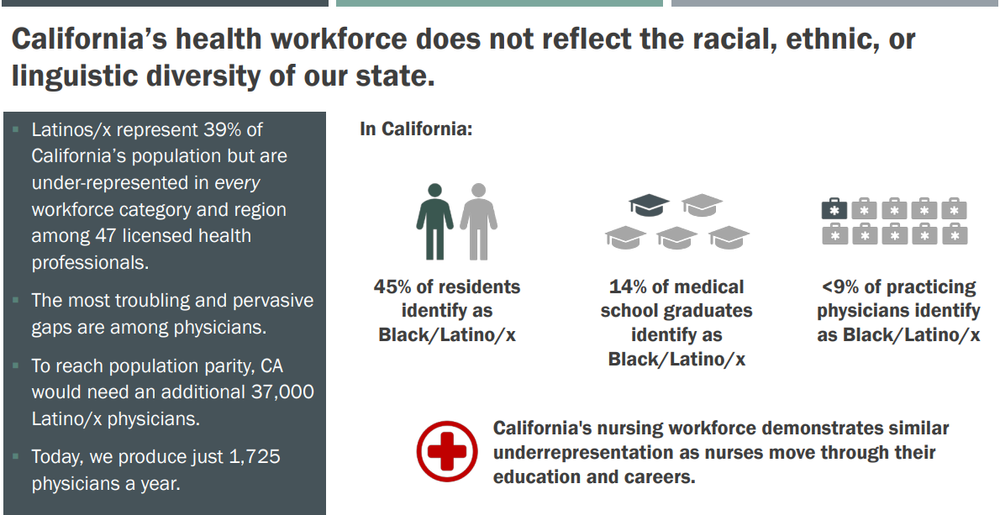
Physician shortages are widespread across California. Many regions fall below minimum national standards for primary care providers, while the state’s physician workforce continues to age.
Key workforce challenges
California’s workforce shortage is not one issue. It includes access, geography, age, training, recruitment, and retention.
Provider shortages
Several regions do not meet minimum standards for primary care providers per capita.
Aging workforce
California physicians, dentists, and rural providers are aging, increasing pressure on the future workforce pipeline.
Underserved communities
Rural and safety-net communities face greater barriers to care, recruitment, and long-term provider retention.
Training gaps
California needs stronger pathways that connect medical education, residency training, and practice in communities with the greatest need.
Representation matters
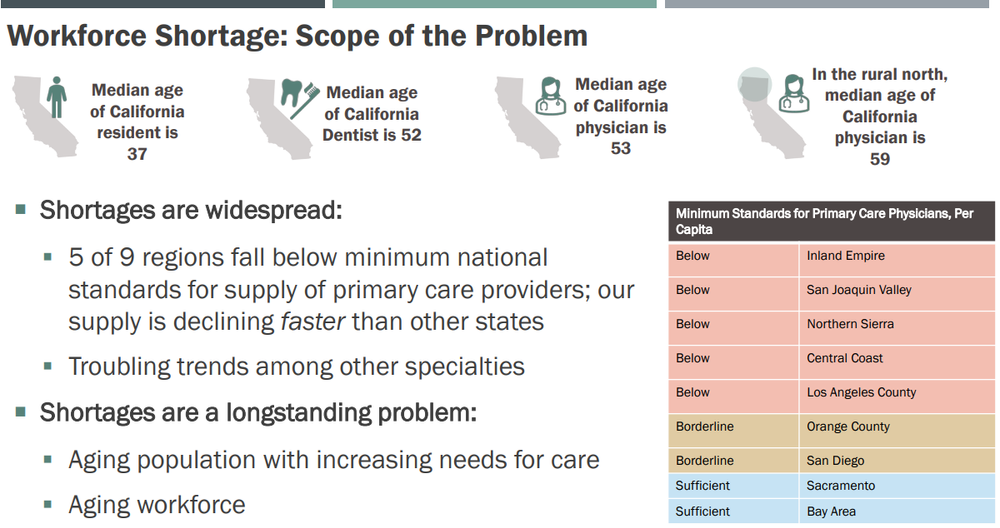
California’s health workforce does not reflect the racial, ethnic, or linguistic diversity of the state. Latino/x communities remain underrepresented across licensed health professions, including medicine.
Why this matters
A stronger workforce pipeline improves access, trust, communication, and care for communities across California.
California residents
Identify as Black, Latino, or x.
Medical graduates
Identify as Black, Latino, or x.
Practicing physicians
Identify as Black, Latino, or x.
LPOC is working to close these gaps.
Through physician leadership, workforce development, policy engagement, and community partnerships, LPOC supports a more equitable healthcare workforce for California.
Contact LPOC